
Service Appointment & Enquiry
Customer Service Tel: 4000-0750-68

Service Appointment & Enquiry
Customer Service Tel: 4000-0750-68
On June 18, 2026, DL/T 2041—2025 Guidelines for Bearing Capacity Assessment of Distributed Generation Connected to Power Systems issued by the National Energy Administration was officially implemented. The core revisions of the new standard are as follows: the rigid one-size-fits-all threshold of 80% reverse load factor for transformers is abolished; a two-tier dynamic assessment system covering the system level and equipment level is established; flexible management and control via unified national green-yellow-red three-color zoning is rolled out to determine accessible capacity by classification, and the assessment follows the principle that local conditions shall be subordinated to overall requirements and lower-level systems to higher-level systems.
The assessment model shifts from static rigid indicators to dynamic comprehensive calculation, while the safety bottom line remains non-negotiable
The standard upgrades the assessment dimension from static equipment-only verification to dynamic evaluation balancing system absorption capacity and equipment bearing capacity. Nevertheless, bidirectional power flow brought by distributed energy still triggers classic problems including reverse overload of transformers and voltage out-of-limit. As the critical hub for grid connection under the self-consumption scheme with surplus power fed to the grid, distribution transformers require an updated configuration philosophy: traditional designs only cater to unidirectional power loads, while upgraded solutions must accommodate bidirectional power flow and guarantee long-term safe and stable operation.
Conventional distribution transformers are designed for unidirectional power supply from the grid. Under reverse power delivery conditions, they face high risks of reverse overload. Heat generated by overload accelerates insulation aging and shortens equipment service life. Three core performance attributes are mandatory for transformers adapted to distributed energy: robust short-time overload capacity to withstand high-power surges, excellent short-circuit resistance to cope with line faults, and outstanding heat dissipation to cut temperature rise under bidirectional power flow, securing long-term safety of both power grids and equipment.
Scenarios with distributed energy such as industrial and commercial plants, logistics parks and public stations need distribution equipment flexibly matched to project scale and site conditions to match self-power loads and enable smooth grid connection, while fitting the land shortage constraints prevailing in many industrial parks.
Grid connection management shifts to flexible control, calling for proactive hardware upgrades of distribution equipment as a safety backup
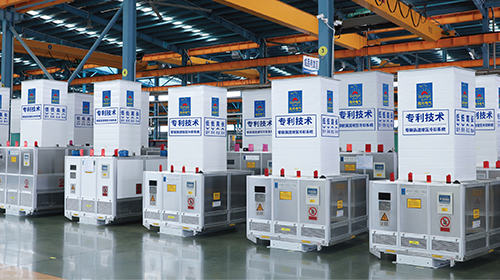
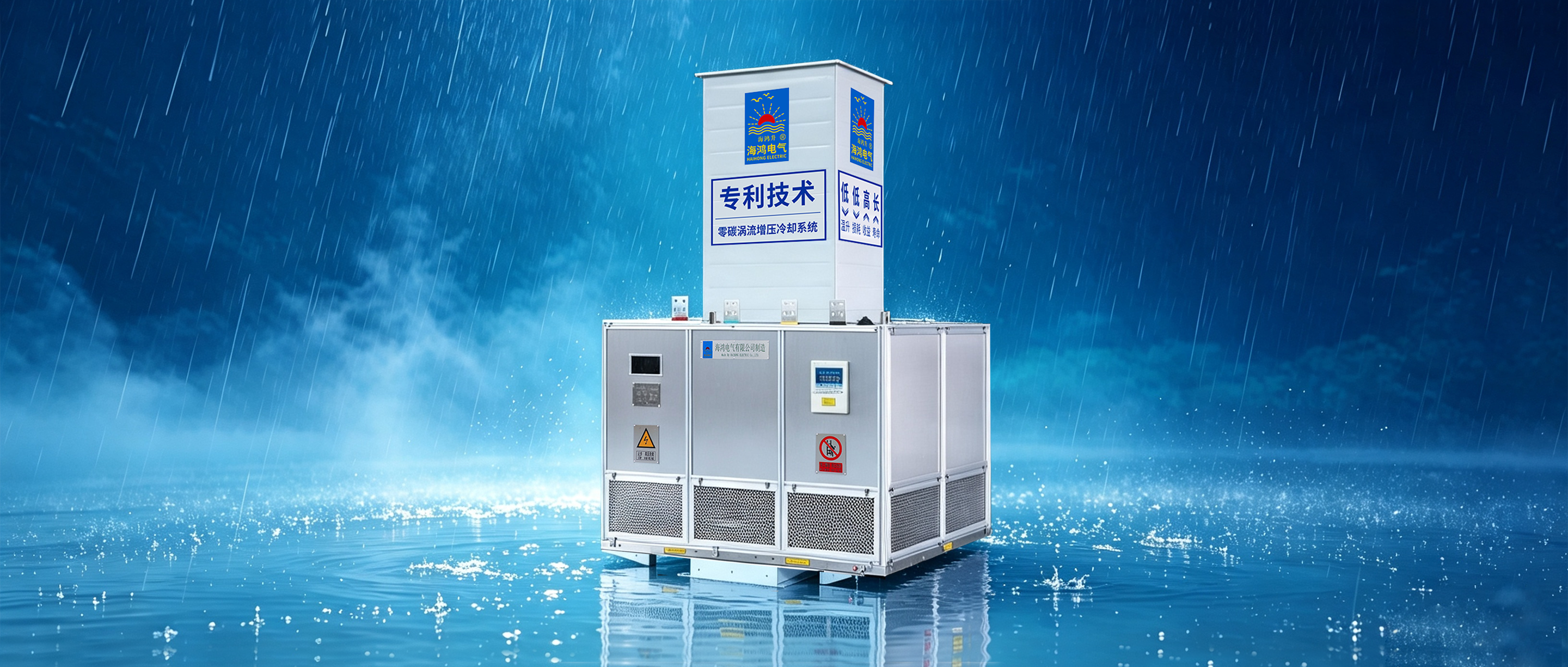
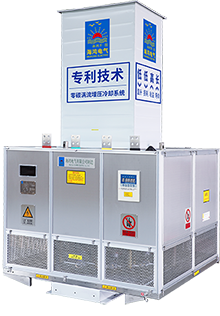
The Fully-Insulated Low-Temperature-Rise 3D Wound Core Dry-Type Transformer with Cooling System adopts a fully insulated 3D wound core structure featuring balanced three-phase magnetic circuits and low no-load loss, with a boosted voltage withstand class of 30 kV that effectively mitigates ground breakdown risks. The fully insulated clamped overall structure delivers stronger impact resistance and lower stray loss, with partial discharge less than 3 pC. It adapts to the intermittent generation characteristics of new energy sources and complex operating conditions, stably coping with peak power generation, reducing no-load loss, enabling smooth grid integration of distributed energy and buffering impacts from reverse load.
Equipped with an innovative zero-carbon eddy current pressurized cooling system as an efficient heat dissipation solution, it delivers enhanced circulation of cold and hot air, superior heat dissipation performance, drastically reduced operating temperature rise, lower power loss and extended service life.
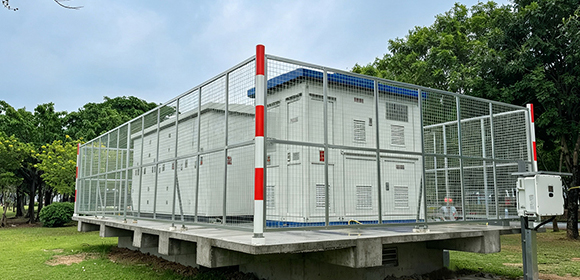
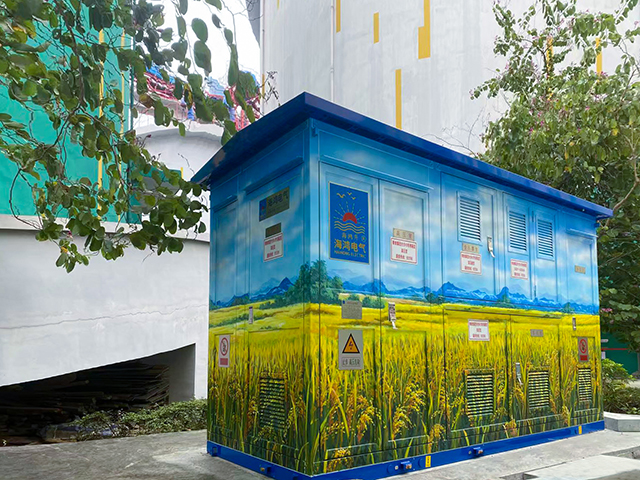
For projects with tight land resources, the Miniaturized Double-layer Prefabricated Substation is the optimal choice. Featuring proprietary pioneering double-layer design, it occupies approximately 45% less land area than conventional single-layer prefabricated substations of the same capacity, and ultra-compact models cut land occupation by roughly 60%. It can be flexibly deployed in distributed energy construction sites with scarce land resources such as aging residential communities and industrial parks.
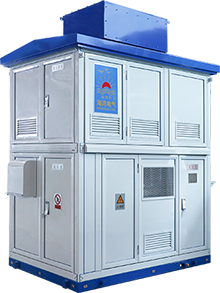
For large-capacity power systems, the Miniaturized Double-layer double-transformer Substation is recommended. Retaining the compact double-layer layout, it houses two integrated transformers to lower overall equipment investment costs. The two transformers serve as mutual backups: one can immediately take over operation when the other fails or undergoes maintenance to realize uninterrupted power supply. It eliminates the need for transformer capacity expansion during subsequent system upgrades, and the two units can flexibly share loads to avoid overload of a single transformer. The Miniaturized Double-layer double-transformer Substation provides dual power distribution safety assurance for large-capacity new energy systems.
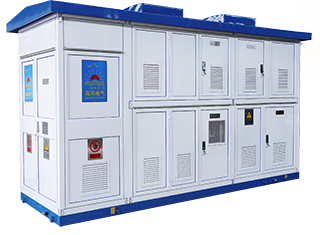
As standards are updated, transformer sizing logic must be upgraded accordingly. The traditional procurement mindset of selecting the lowest-cost "barely adequate" transformers merely based on drawing design parameters can no longer meet current industry demands. Upgrading distribution networks and improving transformer performance constitute the key to unlocking massive installed capacity potential for distributed energy. Backed by 28 years of technical accumulation, Haihong Electric leverages world-leading 3D Wound Core Transformer technology to tackle critical difficulties and pain points in power distribution for distributed energy systems, facilitating China’s national energy system transition.
Proper equipment selection removes bottlenecks in grid connection. Strengthening Chinese manufacturing ensures reliable progress in energy transition.
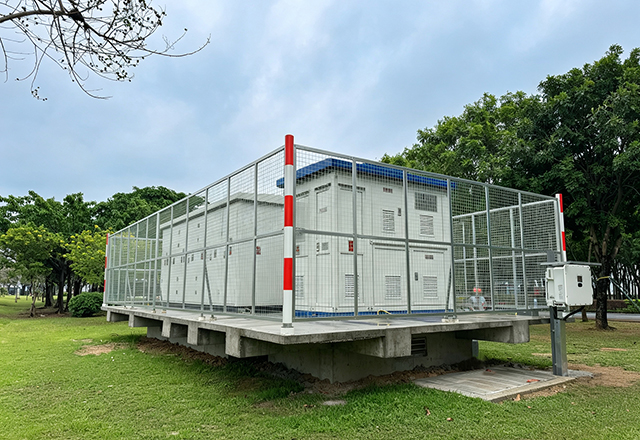
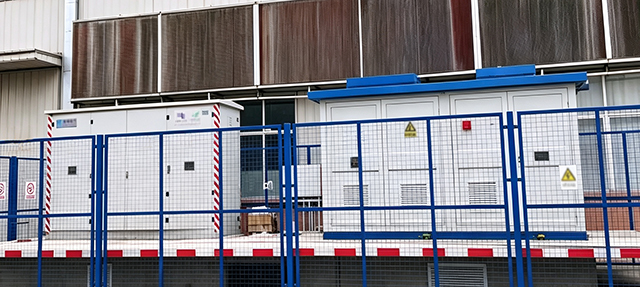
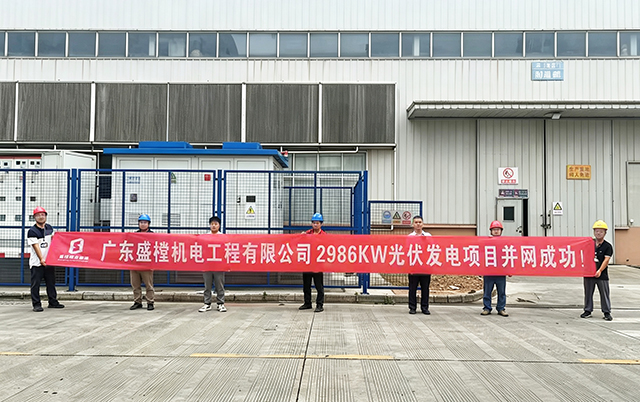
*The above content is the property of HAIHONG Electric Co., Ltd. For reprint authorization, please contact the company directly.