
Service Appointment & Enquiry
Customer Service Tel: 4000-0750-68

Service Appointment & Enquiry
Customer Service Tel: 4000-0750-68
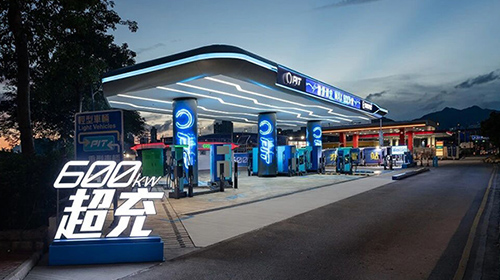
When rolling out new-energy ultra-charging infrastructure in Hong Kong, the core bottleneck lies not in charging terminal technology, but spatial resource constraints inherent to this high-density city. Land scarcity, concentrated electricity load and rapidly rising charging demand mean converting traditional petrol stations into ultra-charging stations is essentially power capacity expansion within limited urban space. PIT Ultra Kowloon Bay Ultra-Charging Station, Hong Kong’s first dedicated high-speed charging station retrofitted from a conventional petrol station, serves as a benchmark for refined deployment of Hong Kong’s ultra-charging infrastructure and energy upgrading of existing sites. It offers a replicable practical pathway for constructing new-energy infrastructure in high-density regions across the Greater Bay Area.
The National 15th Five-Year Plan Outline proposes to “consolidate and elevate the role of the Guangdong-Hong Kong-Macao Greater Bay Area as a growth engine”. Infrastructure connectivity forms the cornerstone for integrated development of the Bay Area. Charging facilities link energy, transport and cross-boundary travel, acting as a pioneering project to break geographic barriers and facilitate the flow of production factors. For Guangdong-Hong Kong ultra-charging interconnection, the challenge lies in space; success hinges on collaboration.
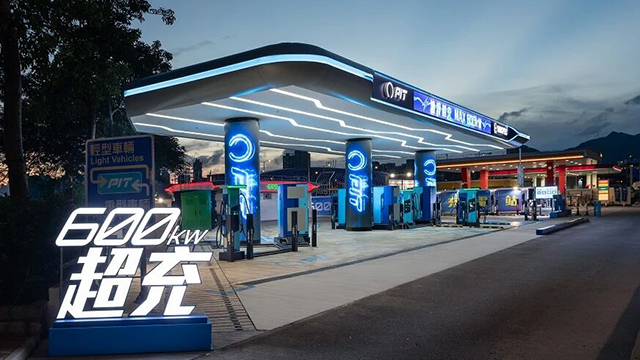
High density, high plot ratio and scarce land resources define Hong Kong’s urban landscape, and constitute the biggest physical barrier to large-scale ultra-charging rollout. The series of compact equipment developed by Haihong Electric can cut footprint by up to 60%. In high-density cities where land comes at a premium, saved space translates into extra charging bays, access lanes and improved community environments. For land-scarce regions such as Hong Kong, the compact and refined design of power distribution equipment directly determines whether ultra-charging stations can be built under tight site constraints. Space is a hard constraint, and technology must first address how to deliver full power distribution supply within confined premises.

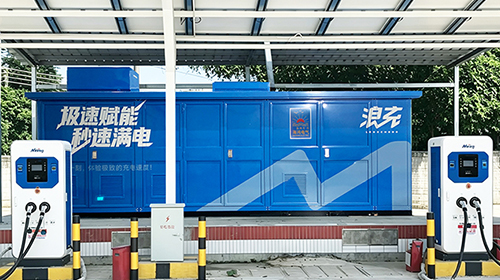
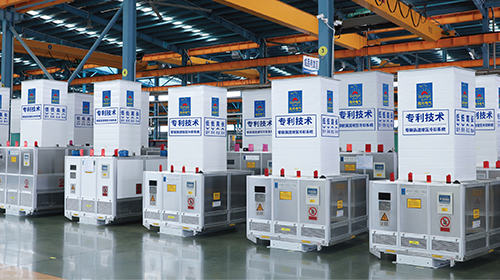
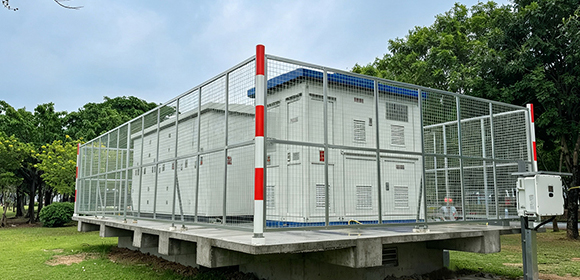
Both the PIT Ultra Kowloon Bay Ultra-Charging Station and Huo Tan Ultra-Charging Station share common industry challenges: limited site space, concentrated high-power fast-charging demand, and continuous heavy-duty equipment operation. Custom-developed by Haihong Electric, the Miniaturized Double-layer Prefabricated Substation is among Hong Kong’s first core power distribution units tailored for confined urban sites. It fundamentally removes deployment limits of conventional equipment and delivers robust support for energy upgrading of Hong Kong’s existing spaces.
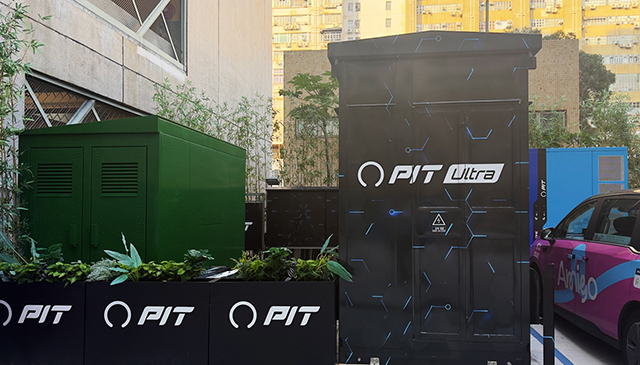
The value of the Miniaturized Double-layer Prefabricated Substation series is not only small footprint. More importantly, much electrical integration work is completed in factory, reducing on-site land occupation and construction coordination efforts. This precisely matches Hong Kong’s realities: constrained sites and tight construction windows. Beyond vertical innovation in substation layout, Haihong Electric keeps advancing product performance.
For charging operators, a power distribution unit with small footprint, fire and explosion resistance, capability to withstand harsh operating conditions, low operational loss, low noise and easy maintenance translates to reduced power wastage, guaranteed safety, simpler upkeep, and greater flexibility for retrofitting higher-power chargers later while maintaining adequate power distribution backup.
Feedback from the station operator shows that the ultra-charging stations with Haihong Electric equipment have been running continuously under heavy load, with stable power distribution equipment and low temperature rise. Real-world operation of the project proves that “compact” equipment can deliver powerful power distribution performance.
The Hong Kong Special Administrative Region’s First Five-Year Plan for Economic and Social Development (2026–2030) explicitly promotes infrastructure connectivity in the Greater Bay Area. Boasting small footprint, flexible arrangement, strong performance and high safety, Haihong Electric’s compact prefabricated substation is well suited to Hong Kong’s land shortage. It provides reliable power equipment support for implementing the plan and expanding Hong Kong’s ultra-charging network.
The Guangdong-Hong Kong-Macao Greater Bay Area aims to build a pilot zone for Beautiful China and a benchmark for green, low-carbon and high-quality development. New-energy infrastructure in high-density urban areas must satisfy functional requirements while aligning with urban ecology and human settlement needs for green development. For Hong Kong’s dense urban districts, low electromagnetic radiation (weak electric and magnetic fields around equipment), low noise, low energy loss and small footprint are direct manifestations of urban-friendly hardware. Haihong Electric’s equipment meets exactly these requirements, with full-lifecycle green design embedded throughout R&D and manufacturing: the transformer adopts environmentally friendly biodegradable insulating materials; its production generates no toxic gases or hazardous waste; it features low operational loss, weak peripheral electromagnetic fields, noise as low as 38 decibels, and high recyclability of the whole unit.

Urban green transition often stems from these “minor innovations” in power distribution equipment. Marginal gains in equipment efficiency, footprint reduction and noise abatement add up to major improvements in urban construction and energy systems.
Guangdong’s 15th Five-Year Plan sets out joint efforts to build the Greater Bay Area into a pilot zone for Beautiful China. In the context of ultra-charging stations, green development means more than electric vehicles. It also requires power distribution systems that are efficient, quiet, land-saving and recyclable. Green collaboration is itself an integral part of the Greater Bay Area’s coordinated development.
The deployment of Haihong Electric’s advanced energy-saving power distribution equipment in Hong Kong serves as a vivid example of Guangdong-Hong Kong industrial coordination, technology exchange and co-development of public infrastructure. It achieves deep integration of advanced mainland intelligent manufacturing technologies, Hong Kong’s high-density urban scenarios and cross-boundary travel demands across the Greater Bay Area. For Hong Kong, it upgrades new-energy transport facilities; for Guangdong, it exports green power distribution solutions; for the Greater Bay Area, it connects the energy chain for cross-boundary mobility. A closed loop is formed covering industrial coordination, technology rollout and public infrastructure.

As the “Guangdong EVs Going South” programme continues to expand, whether charging infrastructure can evolve from “functional at individual stations” to “usable across boundaries” represents profound practice for Greater Bay Area connectivity. Further ahead, more stations, cities and coordinated standards will be needed. When mainland technologies, Hong Kong site conditions and cross-boundary demands converge within one power distribution solution, Greater Bay Area integration becomes more than lines on a map — it forms a closed energy chain linking vehicles, travellers and hardware. This is also inherent to China’s vision of building the Guangdong-Hong Kong-Macao Greater Bay Area into a world-class urban cluster, a modern comprehensive transport system, and a high-quality living circle suitable for living and working.
For Guangdong-Hong Kong ultra-charging interconnection: constrained by space, empowered by collaboration. Physical hard connectivity enables equipment installation, and compatible equipment ensures cross-boundary usability. Only by advancing both in tandem can Greater Bay Area infrastructure connectivity achieve systematic collaborative capacity.
*The above content is the property of HAIHONG Electric Co., Ltd. For reprint authorization, please contact the company directly.